

If you’re preparing to sell your home in markets like Bothell, Kirkland, Woodinville, Seattle, or Everett, one of the most important—and often misunderstood—metrics you’ll encounter is Days on Market (DOM).
At first glance, DOM seems simple: it’s the number of days a home is actively listed before going under contract. But in reality, it plays a powerful role in buyer psychology, pricing strategy, and ultimately how much money you walk away with.
Understanding how DOM works—and how to control it—can be the difference between maximizing your home’s value and leaving money on the table.
What Is Days on Market, Really?
Days on Market measures how long your property is listed on the MLS before an offer is accepted. It’s widely used by buyers and agents to gauge:
- Demand for your home
- Whether it’s priced correctly
- How competitive your listing is
Nationally, homes are currently averaging around 66 days on market, though this varies widely by location and price point (Redfin). In fast-moving areas like parts of the Puget Sound region, homes priced correctly can sell much faster—sometimes within days.
The Critical First Two Weeks
Here’s the part many sellers don’t realize:
Your home gets the most attention the moment it hits the market.
The first 1–2 weeks generate:
- The highest number of showings
- The most online views
- The strongest offers
After that initial surge, interest begins to decline. According to real estate insights, momentum slows significantly after the first couple of weeks, and buyers begin to approach the listing differently (Opendoor).
This creates a simple but powerful truth:
👉 You don’t get a second chance at a “first impression” in real estate.
The Danger of Overpricing
The most common reason homes sit on the market too long?
Overpricing from the start.
It’s understandable—every seller wants to maximize value. But pricing too high can have the opposite effect.
When a home is overpriced:
- Buyers skip it entirely while browsing
- It doesn’t show up in the right search brackets
- It gets fewer showings during that critical launch window
And once that initial momentum is gone, it’s incredibly hard to get back.
In fact, many “stale” listings—homes sitting 60+ days—are the result of sellers chasing unrealistic price expectations early on (Redfin).
The “Stale Listing” Effect
When a home lingers on the market, something subtle but powerful happens:
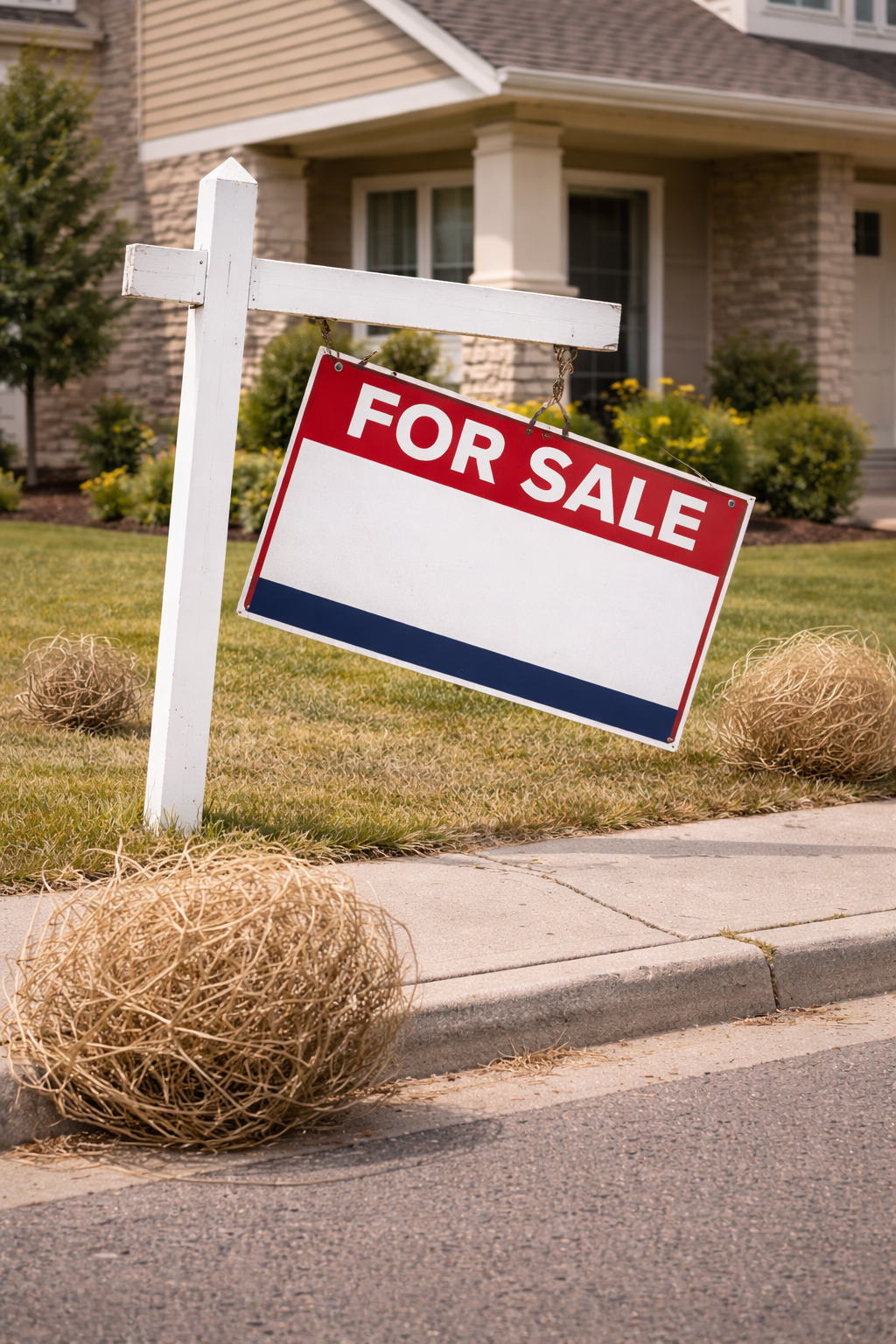
buyers start to assume something is wrong.
Even if your home is in great condition, a high DOM can trigger questions like:
- “Why hasn’t this sold?”
- “Is it overpriced?”
- “Are there hidden issues?”
Research shows that longer DOM directly affects buyer perception, often leading to lower offers or less urgency (Burgelman Homes).
In other words:
- A fresh listing creates excitement
- A stale listing creates skepticism
Why Pricing Right From Day One Wins
Here’s where strategy comes in.
Homes that are priced correctly from the beginning often:
- Generate multiple offers
- Sell faster
- Close closer to—or even above—asking price
Meanwhile, homes that start too high and require price reductions tend to:
- Sit longer
- Attract bargain-minded buyers
- Sell for less than they would have initially
This might seem counterintuitive, but it’s one of the most consistent patterns in real estate.
Why It Works
When you price correctly upfront:
- You capture peak buyer demand
- You create competition
- You maintain negotiating leverage
When you overprice:
- You miss the peak window
- You chase the market downward
- You lose leverage
The Price Reduction Trap
Many sellers think:
“We can always lower the price later.”
Technically true—but strategically flawed.
Each price reduction sends a signal:
- “This home isn’t getting offers”
- “The seller is getting more flexible”
Buyers notice this and often wait, expecting further reductions.
By the time the price finally aligns with market value, the listing may already be stigmatized—and offers come in lower than they would have originally.
Local Market Reality in the Puget Sound
In areas like Seattle’s Eastside and North King/Snohomish County:
- Well-priced homes can still sell quickly
- Buyer expectations are high
- Competition is selective, not universal
In neighborhoods across Bothell, Kirkland, and Woodinville, buyers are savvy. They’re comparing:
- Price per square foot
- Condition
- Days on market
If your home stands out early, you win.
If it lingers, buyers gain the upper hand.
When Longer DOM Isn’t a Problem
To be fair, not all high DOM is bad.
Certain homes naturally take longer to sell:
- Luxury properties
- Unique or custom homes
- Niche locations
In these cases, a longer marketing time is expected. But even then, pricing strategy still matters—and overpricing will still extend DOM unnecessarily.
The Bottom Line: Time Equals Money
In real estate, time on market is not neutral—it’s financial.
- More time = more uncertainty
- More time = weaker negotiating position
- More time = lower final sale price (in many cases)
On the flip side:
- Less time = stronger demand
- Less time = better offers
- Less time = higher net proceeds
Final Thoughts for Sellers
If you’re thinking about listing your home, the key takeaway is simple:
The best way to get top dollar is not to “test the market”—it’s to enter the market correctly.
A well-priced home:
- Attracts immediate attention
- Creates urgency
- Maximizes competition
And in most cases, that leads to a better outcome than chasing a higher price and watching your listing grow stale.
Thinking About Selling?
At Grant Team Properties, we focus on positioning your home to:
- Sell quickly
- Attract strong offers
- Maximize your return
Because in today’s market, it’s not just about listing your home—it’s about launching it the right way.